
When your legacy equipment fails and nobody makes parts for it, do you have the engineering support to bring it back to life?
Note: Some details were omitted for client privacy.
The manufacturer has stopped supporting your production machine. It is critical to your operation, but if it wears out, you have no spare parts, and it can't be revived with generic off-the-shelf replacements. Over time, your machine’s deteriorating performance leads to inferior output for your end customers. Operators suffer with frustrating workarounds and you are losing money from production line downtime. What do you do?
That is the situation in which a local food manufacturing operations manager found himself.
The machine in question cuts bulk feedstock into bite-sized snacks. It is used for every SKU produced by a small Buffalo, NY brand. It is generations old and the manufacturer stopped providing parts and service. Decades of wear and tear had taken its toll: Cutting blades were dull, moving parts were worn, fasteners were loose or stripped. Years of failures had been followed by quick fixes to get production going again. The machine performs an essential role in the production line, creating an iconic snack shape beloved by customers. A new machine, even if it was within budget, wouldn’t achieve the distinctive shape. There was nobody from the manufacturer to call and nowhere to order replacement parts. When output quality slipped, the alarm sounded.
CPD arrived onsite to discuss the issues with the client and inspect the cutting machine. Together they developed a plan to give the machine new life.
Bolts were stripped, blades were dull, and protective panels were dirty and cracked. Mismatched hardware had settled into place after years of temporary fixes using whatever was around the production floor. As they always tend to, the “temporary” fixes had never been revisited. Using the machine had become awkward. Maintaining it was difficult and risked further damage.
CPD and the client agreed on a multi-phase approach:
1. Revitalize the critical function of the machine.
2. Upgrade the exterior panels of the machine.
3. Increase machine throughput and reliability.
Phase 1: Revitalize the critical function of the machine. Overhaul the cutting system and focus on the path of the feedstock through the system. Re-establish the reliable, high-quality output of its glory days.
First, CPD reverse-engineered spring-loaded plastic supports plungers that guide the feedstock as it is cut. On the machine, plungers were worn, cracked, or missing.
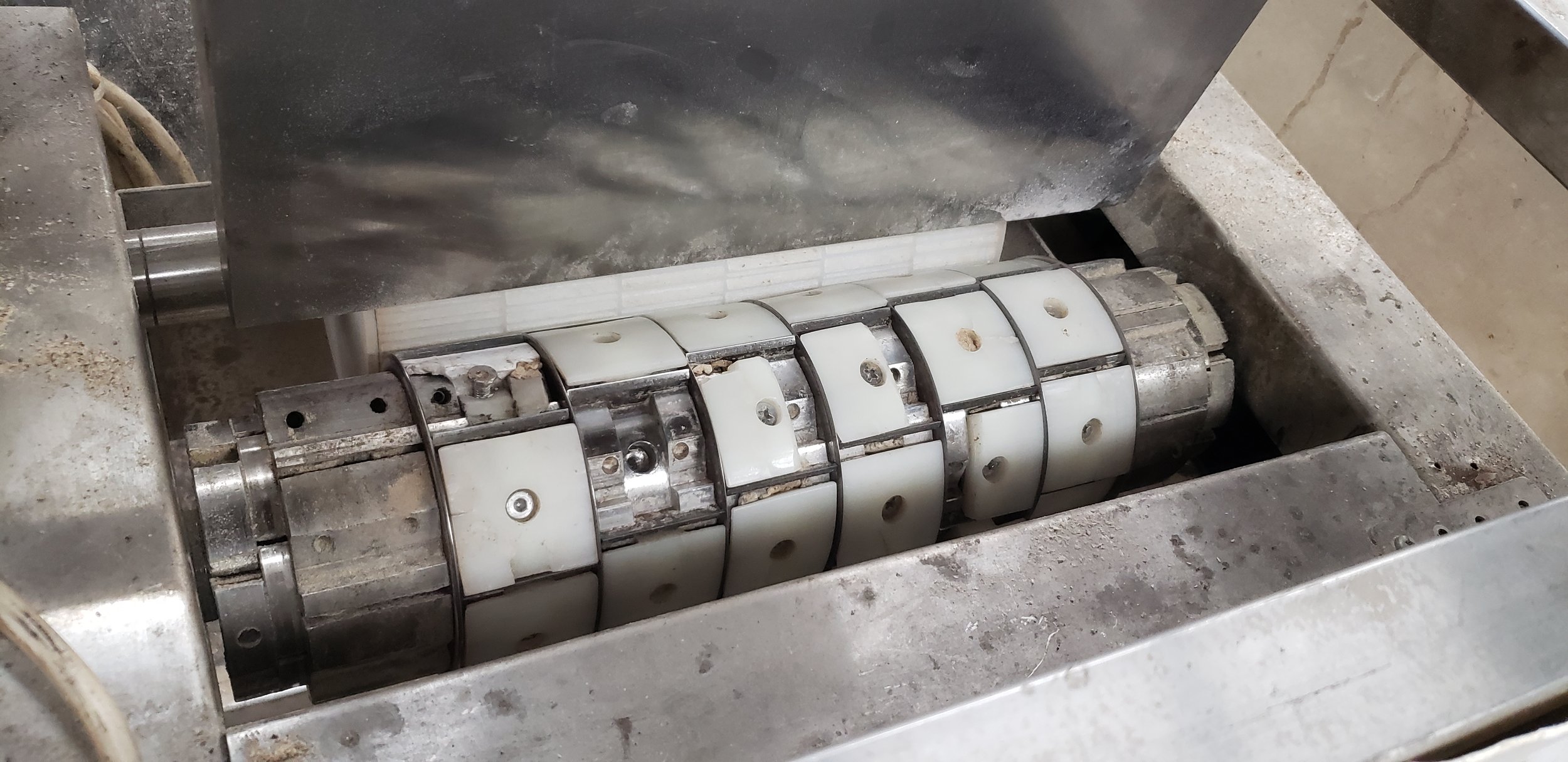
Cutting system with broken support plungers
Using one of the few remaining intact plungers, CPD created a CAD model with added improvements for longevity. A set of 42 new plungers (plus some spares) was machined from UHMW, meeting the client’s requirements for wear resistance and food safety.
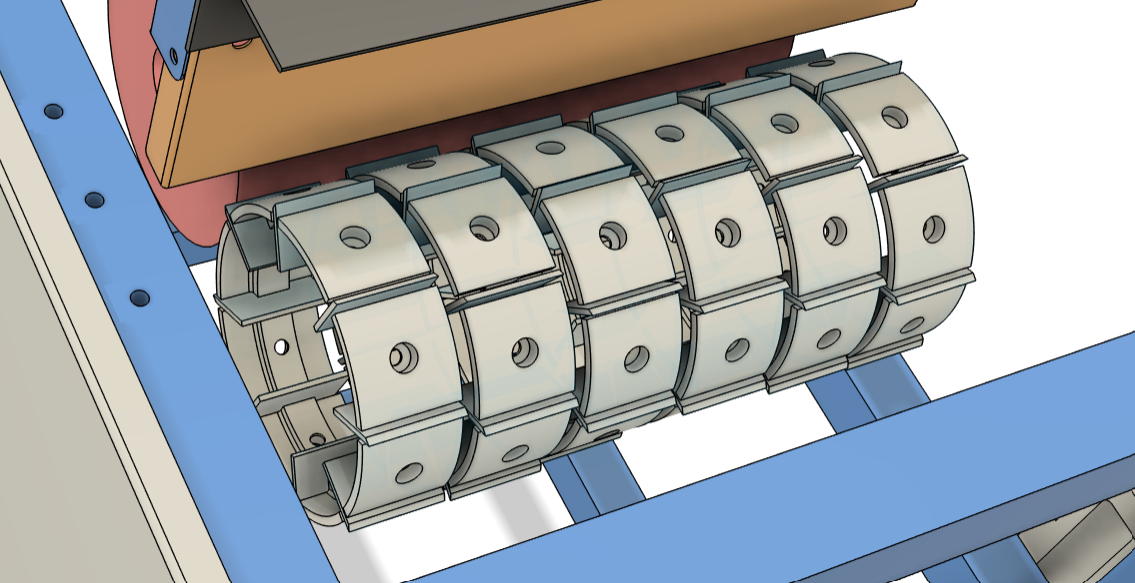
Cutting system CAD model
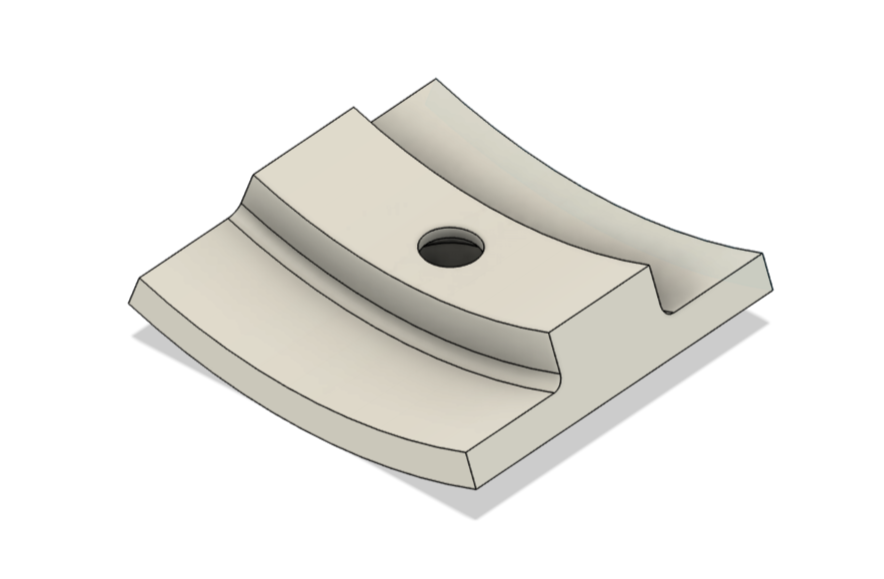
Support plunger CAD model
CPD also reverse-engineered the existing dull, damaged cutting blades. 42 new blades (plus some spares) were designed in CAD, CNC plasma cut from hardened steel, and hand-ground with razor-sharp edges.
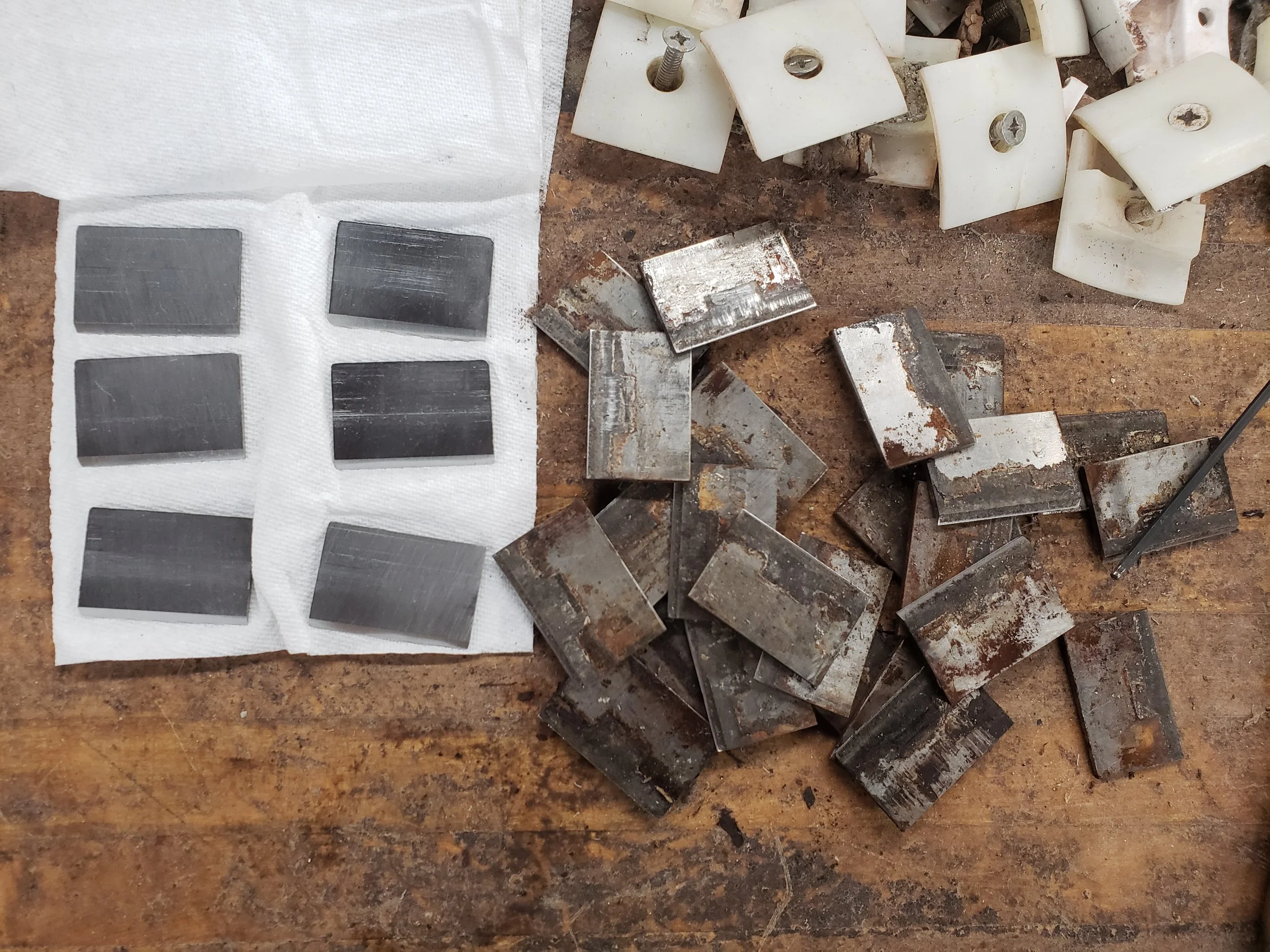
New cutting blades (left) and old cutting blades (right)
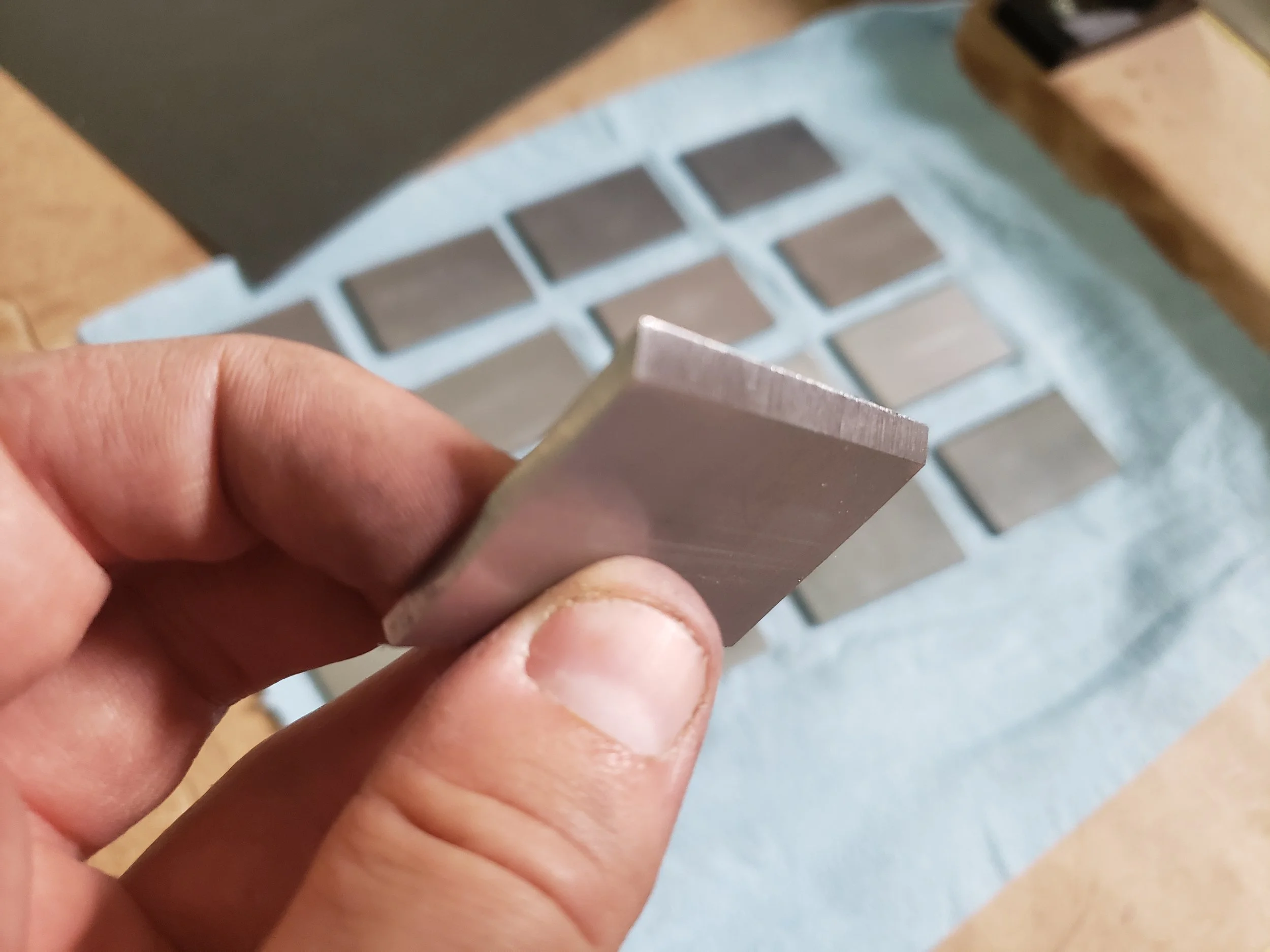
New cutting blade
Along with the support plungers and blades, CPD specified and procured 42 new metric bolts and compression springs which worked together to coax the feedstock in a renewed and consistent manner through the machine.
CPD conducted the installation onsite. In less than a half day’s time, the machine was cutting better than it had in years.
Phase 2: Upgrade the exterior panels of the machine so that it is safer, easier to clean, and matches with the modern equipment on the production floor.
Two side panels protect internal components from external debris and unauthorized tools and fingers. They were originally made from clear acrylic sheets. After thousands of production shifts, the panels had become yellowed, stained, and severely cracked. Their mounting fasteners had rattled loose and long been replaced with various mismatched alternatives. Threads were stripped. Disassembly, which is required for regular maintenance, had become confusing and precarious. Multiple tools were required to remove a single panel.
New panels had to be robust, corrosion resistant, and easy to clean. Maintenance was currently a frustrating bottleneck. Removing the panels should be quick and easy for a single technician. CPD took thorough measurements of the machine onsite. Two new side panels were designed and laser cut from stainless steel sheet metal. They were configured with a flange at the top so that aligning the panels into place was simple and ergonomic. Panels were configured with hand knobs for 100% toolless access, eliminating guesswork during maintenance. One panel was fitted with a robust 3D printed cover protecting the motor controller.
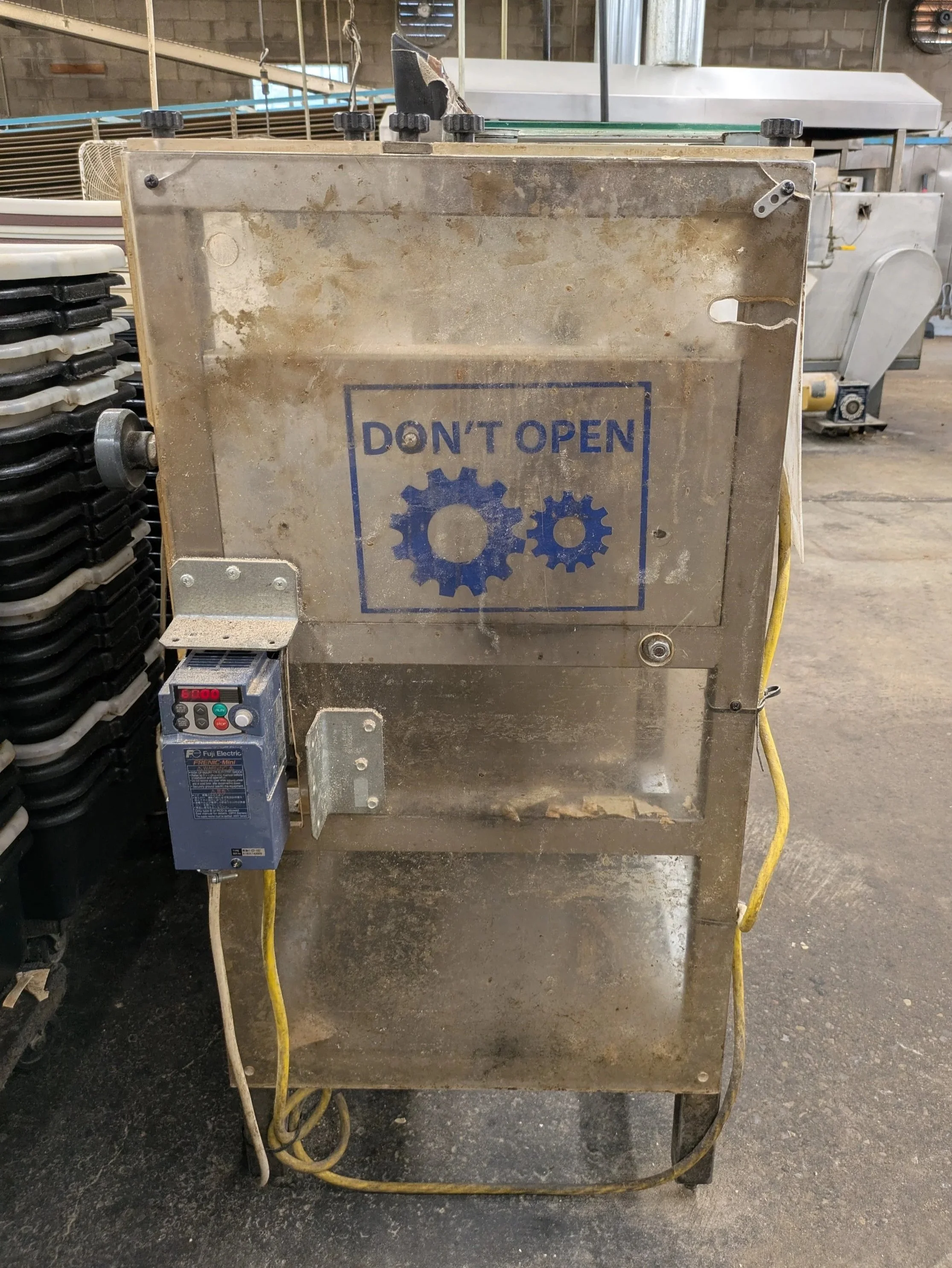
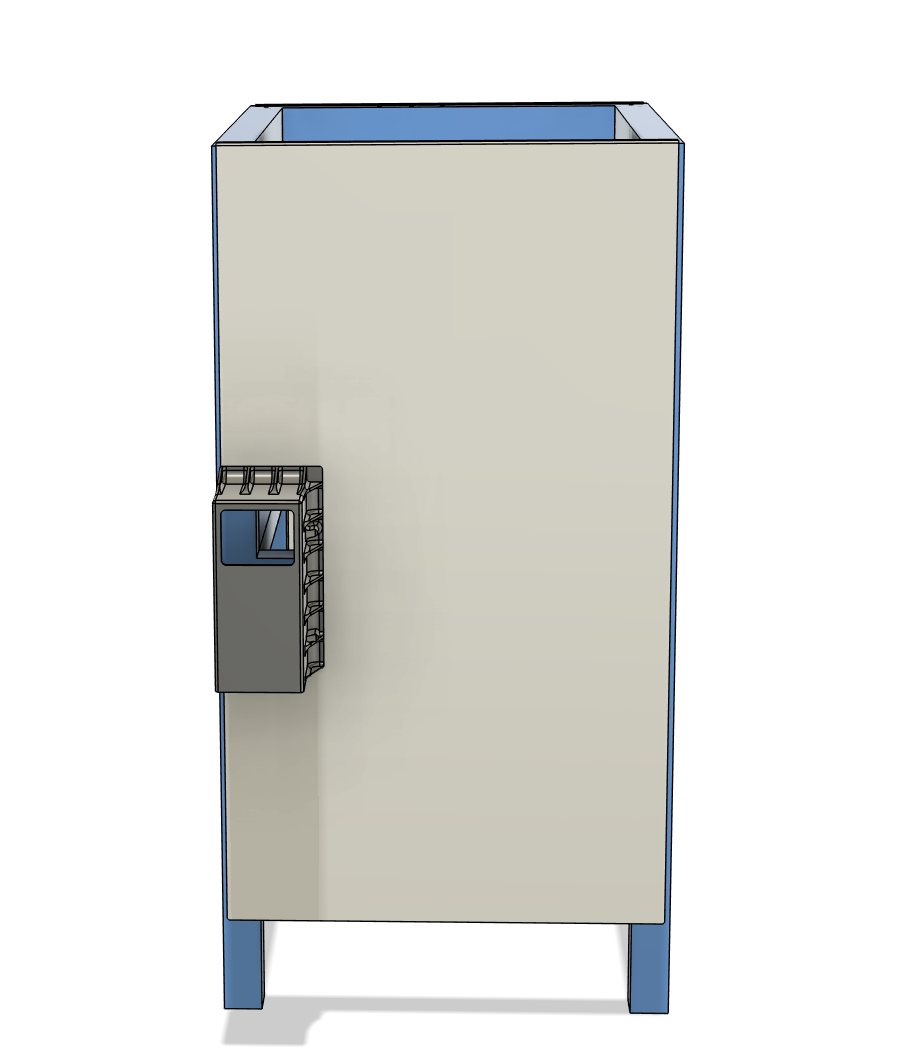
Old side panel (left) and new side panel CAD model (right)
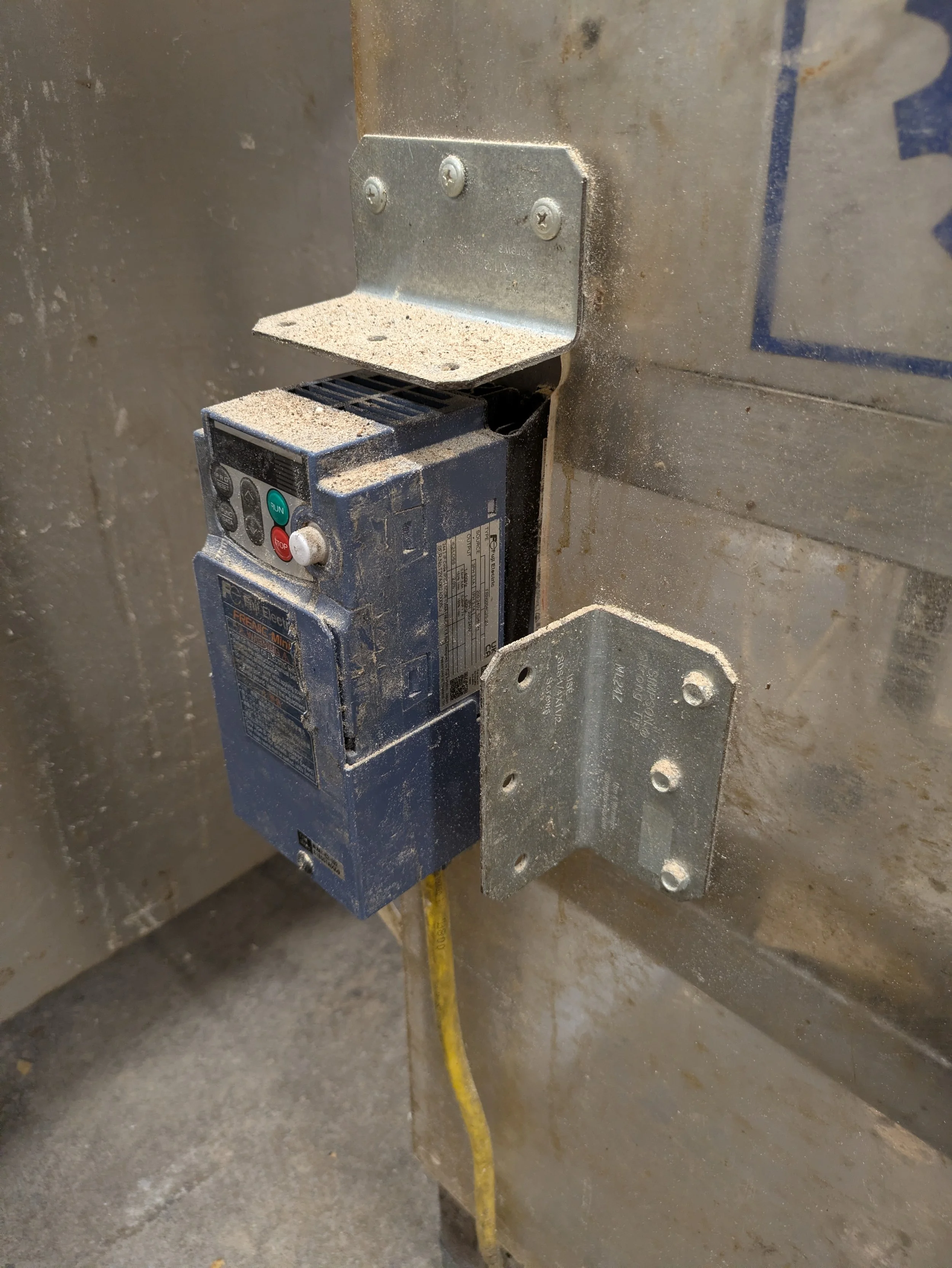
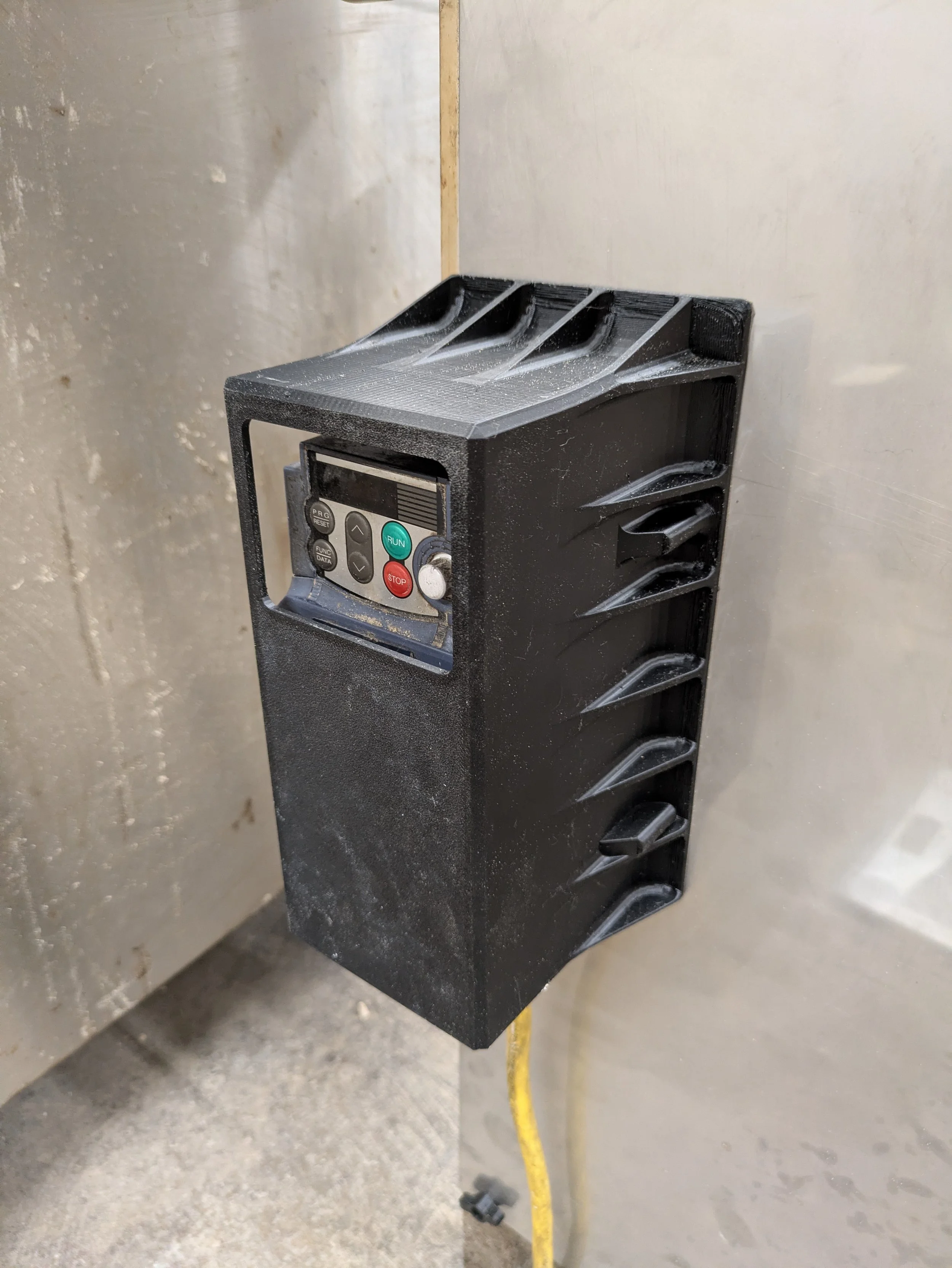
Old, exposed motor controller (left) and new motor controller cover (right)
The machine’s top work surface is used by production workers to hold crates of feedstock as it is guided into the top chute. It was cramped, hard to clean, and difficult to remove for maintenance.
CPD recycled an old stainless steel work table from the client - reducing cost, clutter, and embodied carbon. The new surface was drilled and ground to work with the existing machine frame. A stainless steel feedstock chute was designed, laser cut, bent, and bolted together. It is adjustable and keeps operators’ hands far from the blades.
CPD installed all the new parts onsite. The machine now features toolless disassembly for regular maintenance, it is safer and more ergonomic to use, and it has a refreshed look that is easy to clean with a damp cloth.
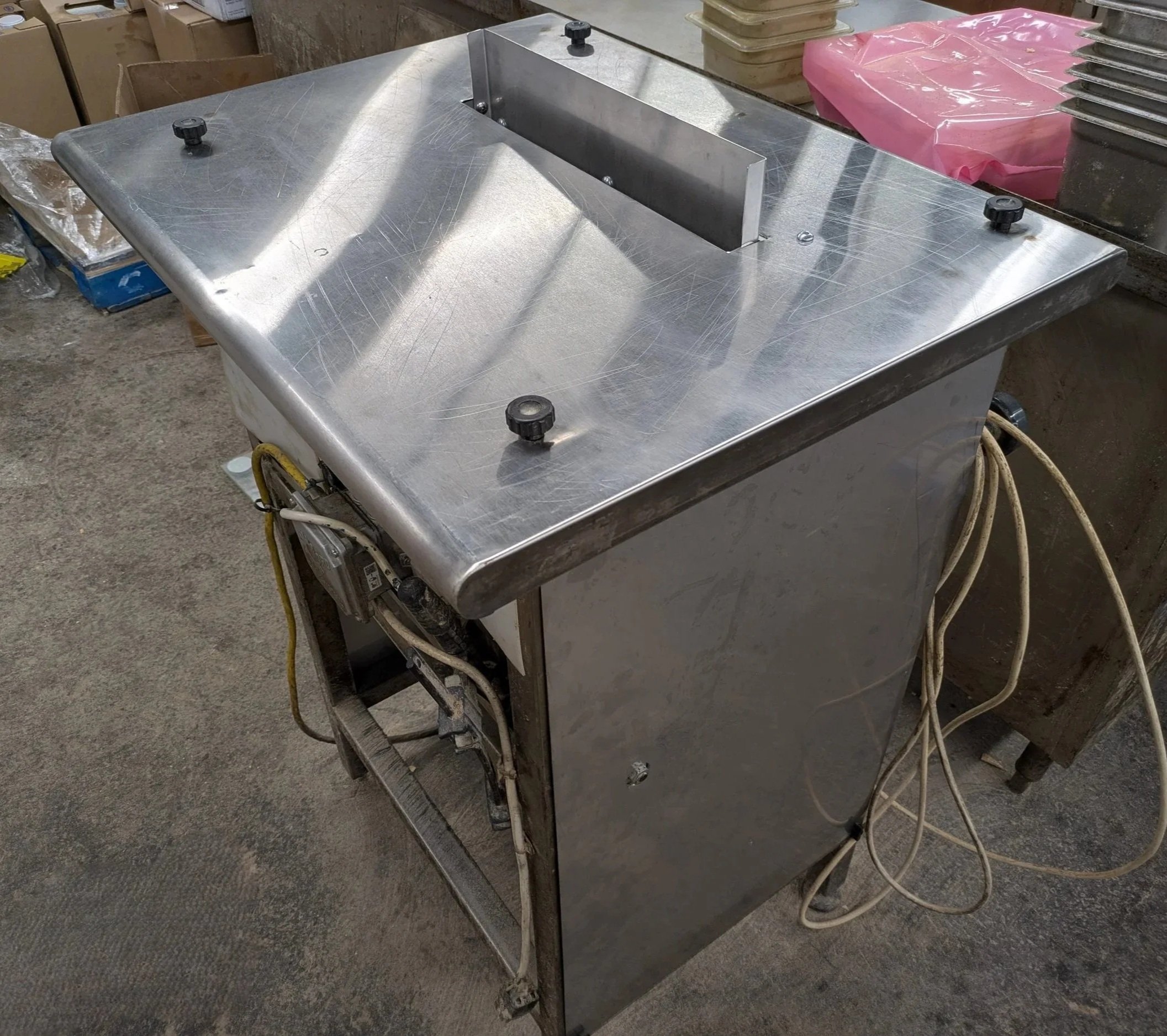
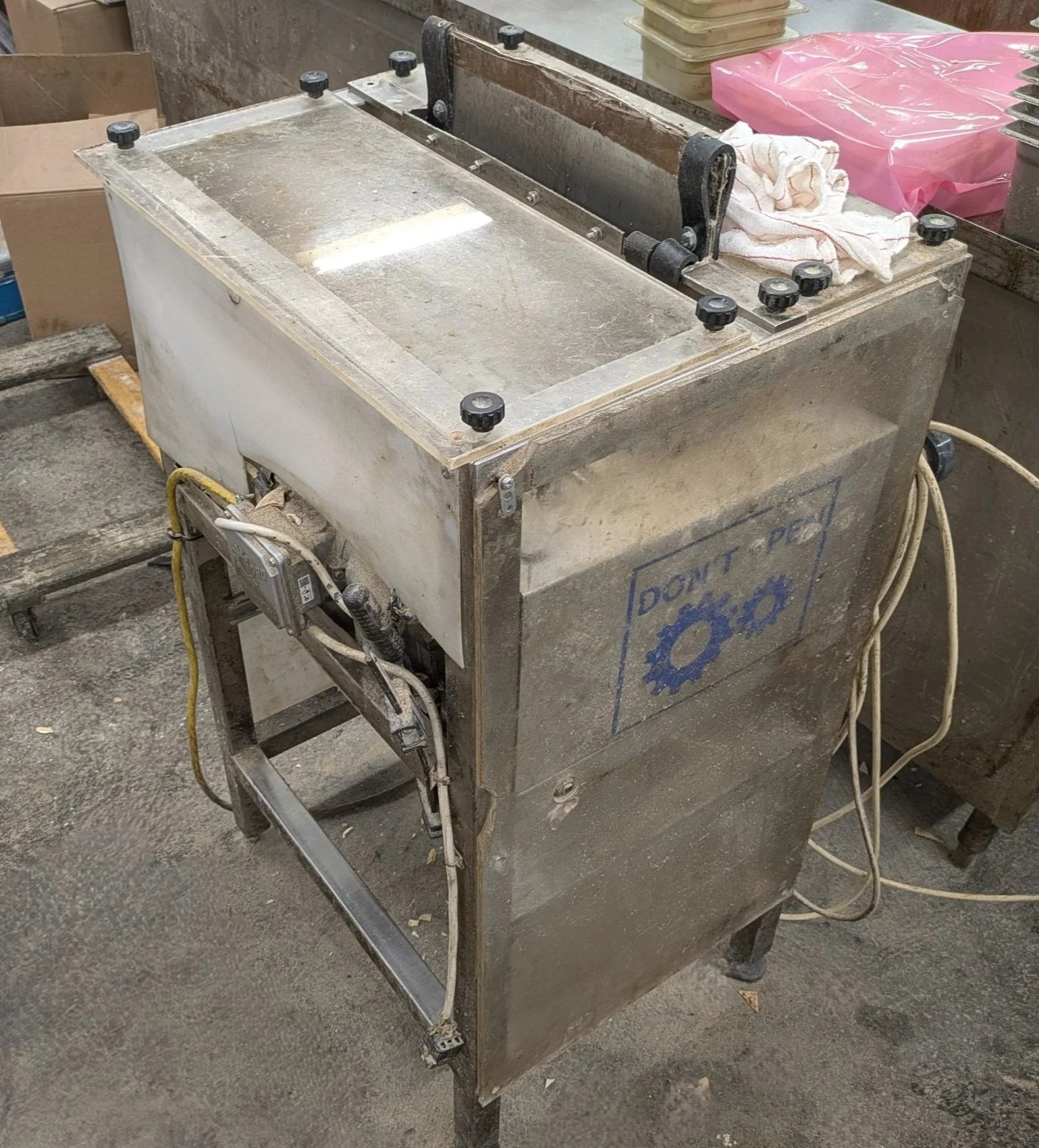
Cutting machine before (left) and after (right)
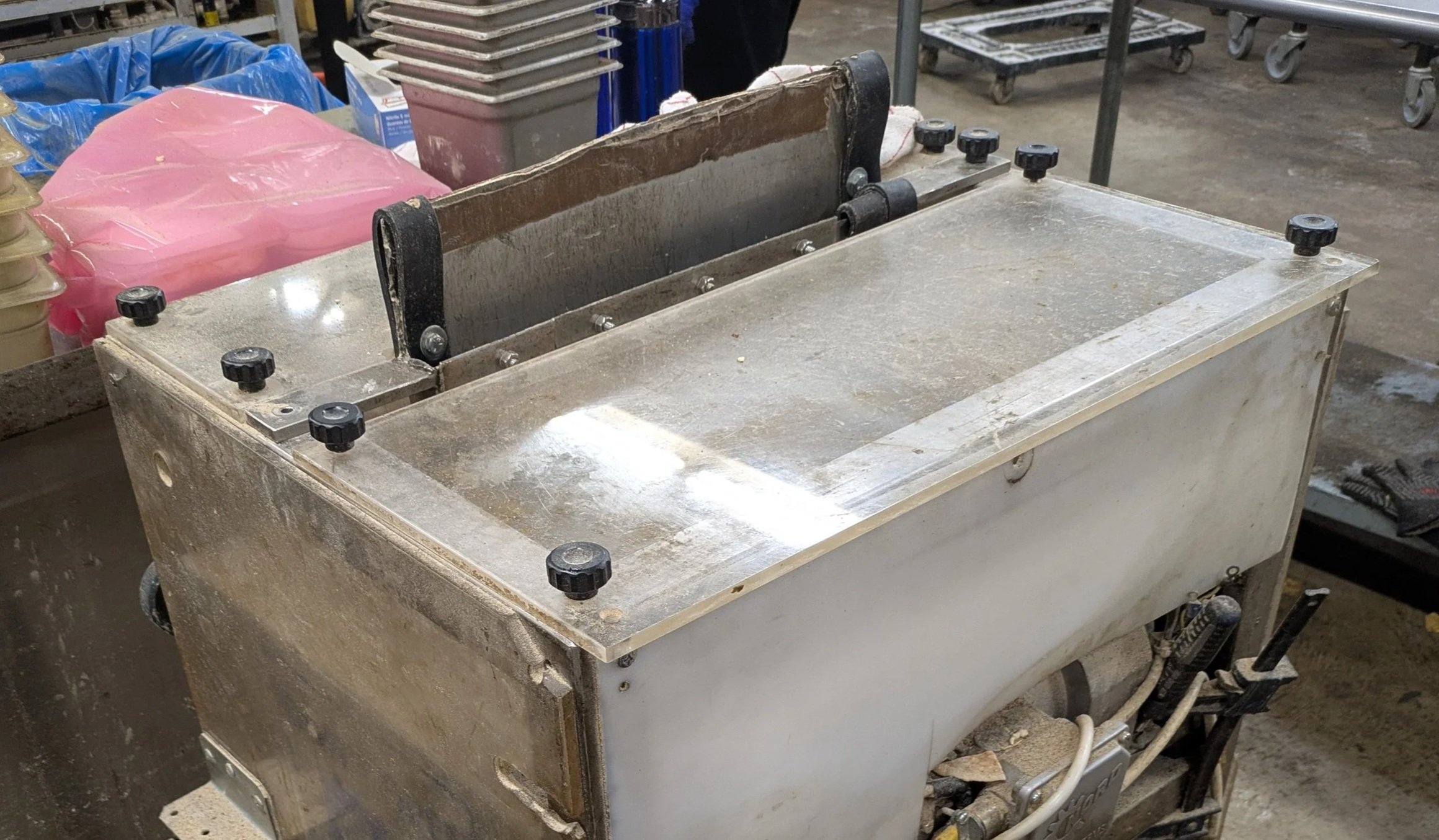
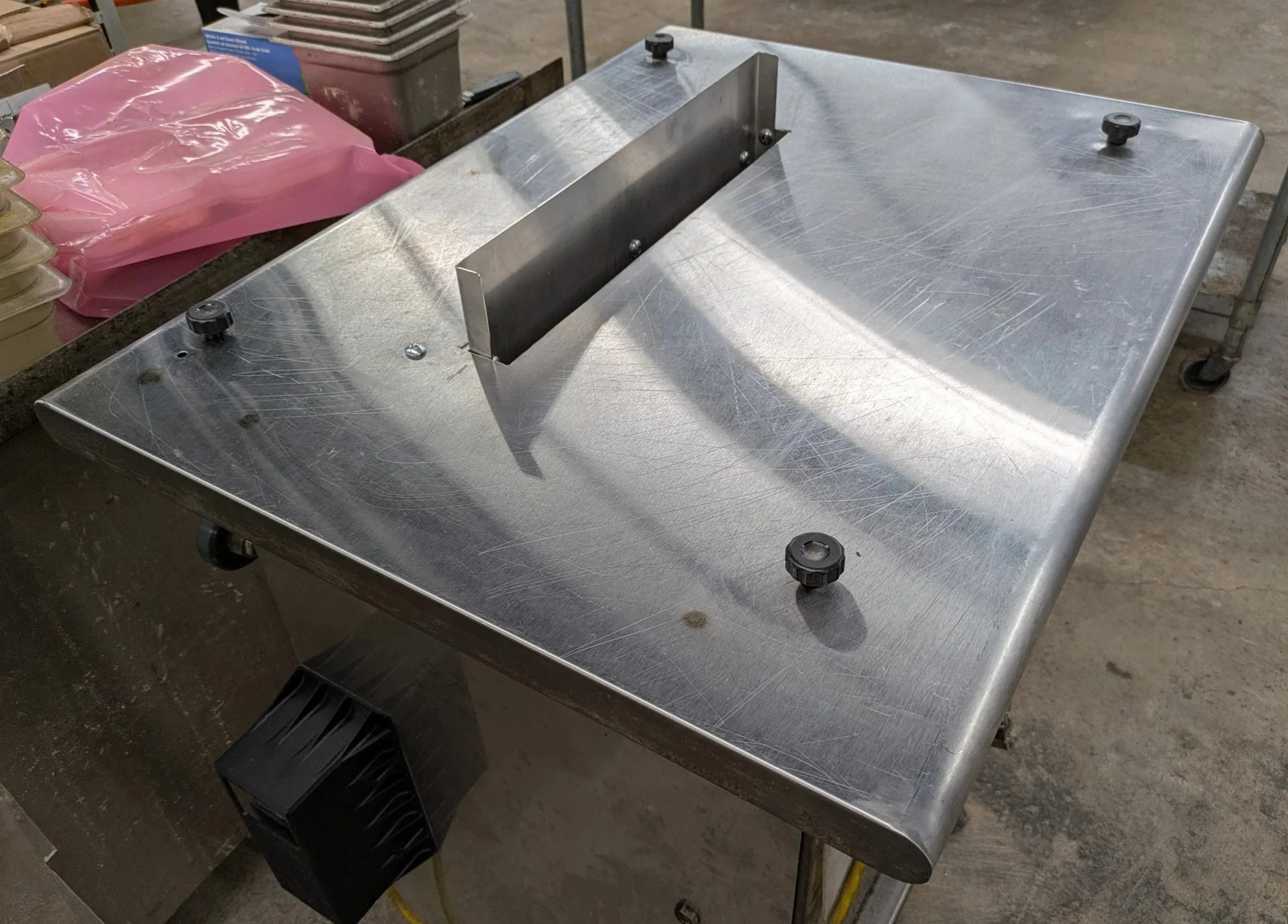
Work surface before (left) and after (bottom)
Phase 3: Increase machine throughput and reliability by re-engineering internal systems to reduce wear parts and maintenance time.
Now that accessing the internals for maintenance was much simpler, CPD addressed the maintenance items themselves. CPD and the client discussed ways to reduce downtime and consumable costs. The machine had incorporated large solid UHMW rollers which wore down at regular intervals, needing resurfacing or replacement. They were difficult and expensive to source, difficult to remove and exchange, and resulted in significant plastic waste at the end of their lifespan.
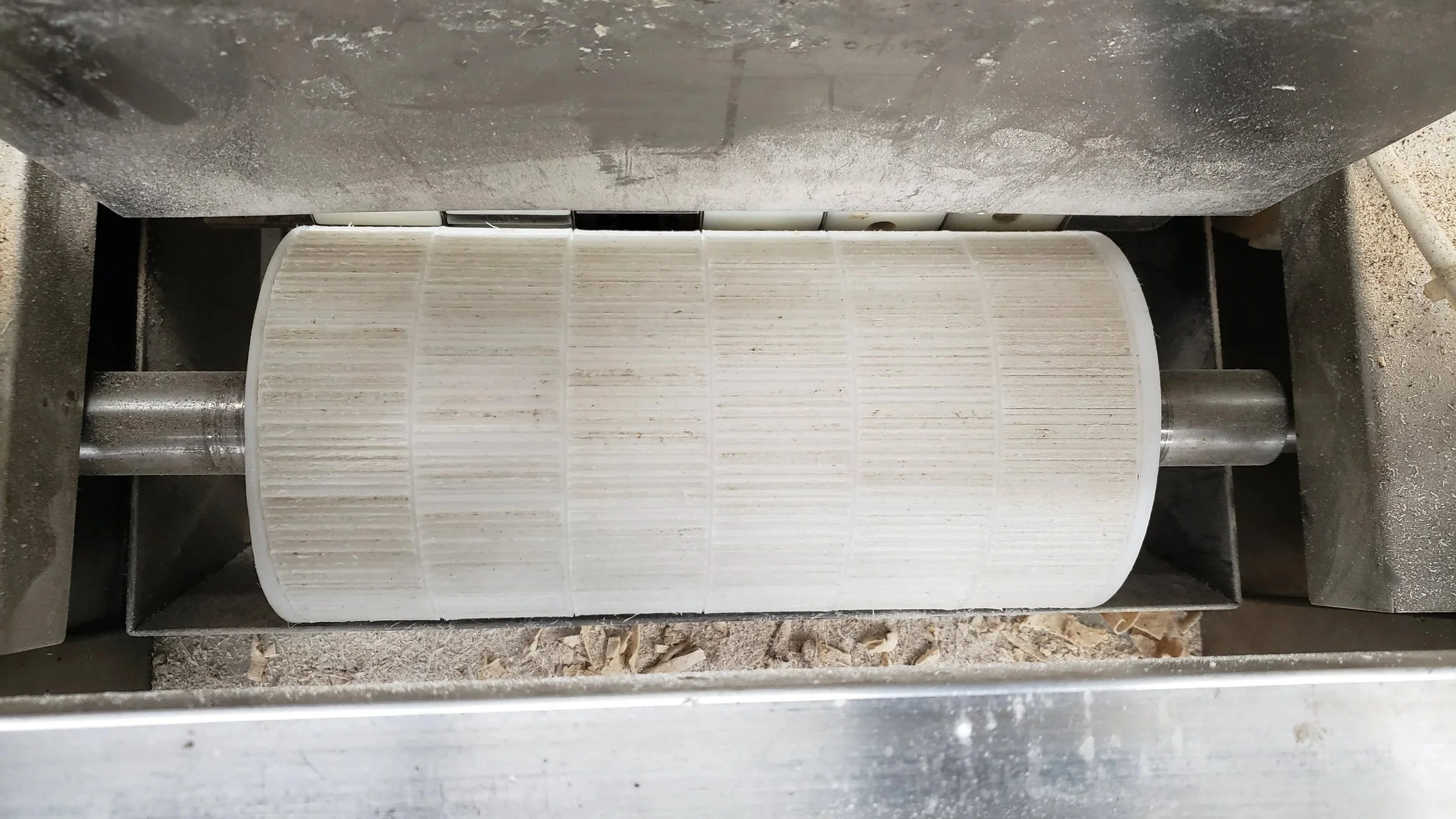
Solid UHMW roller
CPD evaluated the antiquated system and developed a new system of exchangeable sleeves to replace the solid rollers. 3D printed collars held the new sleeves in alignment. The new sleeves were longer lasting, less expensive, easier to source, and easier to replace. The system of sleeves also significantly reduced UHMW waste.
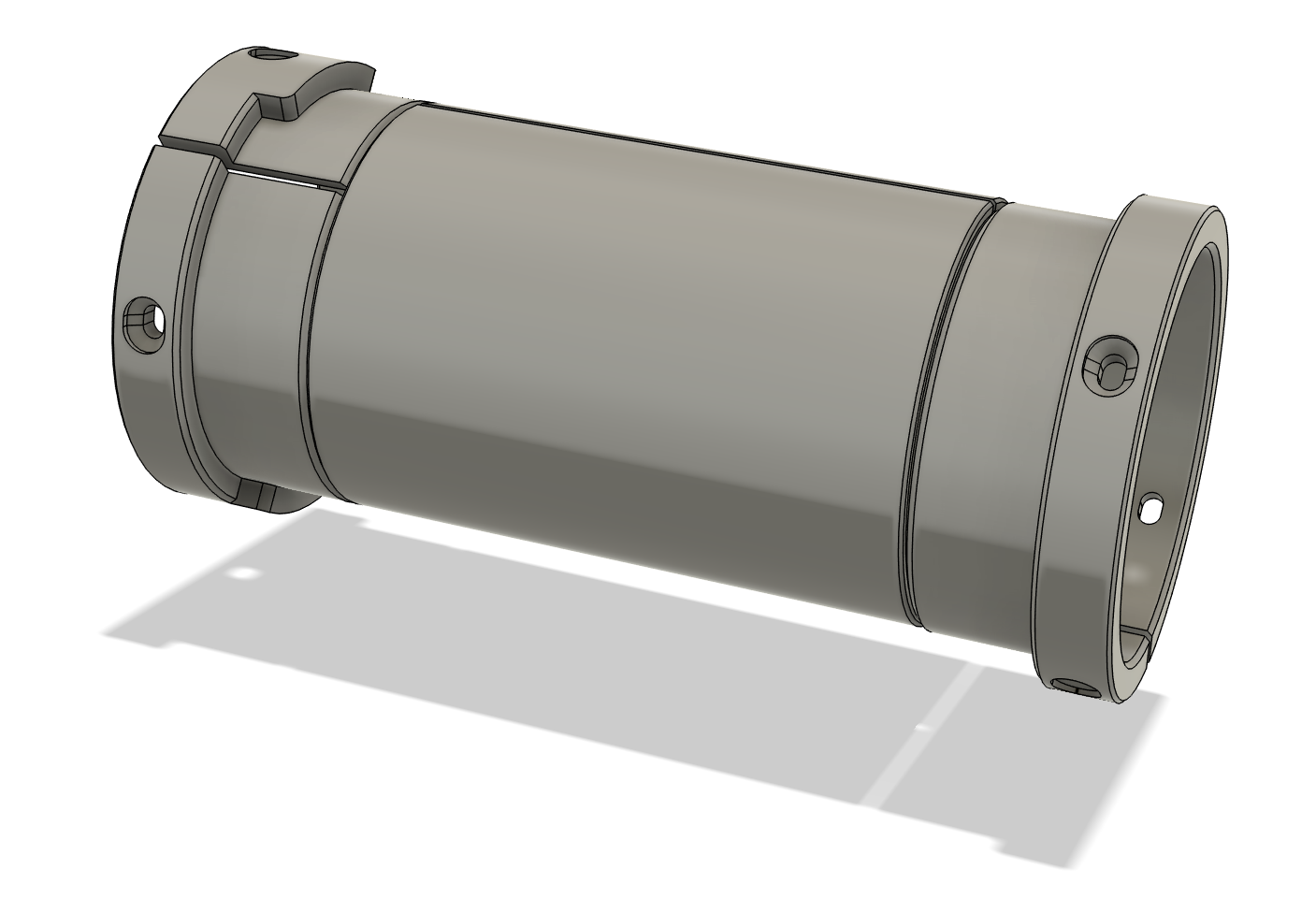
Sleeve system CAD model
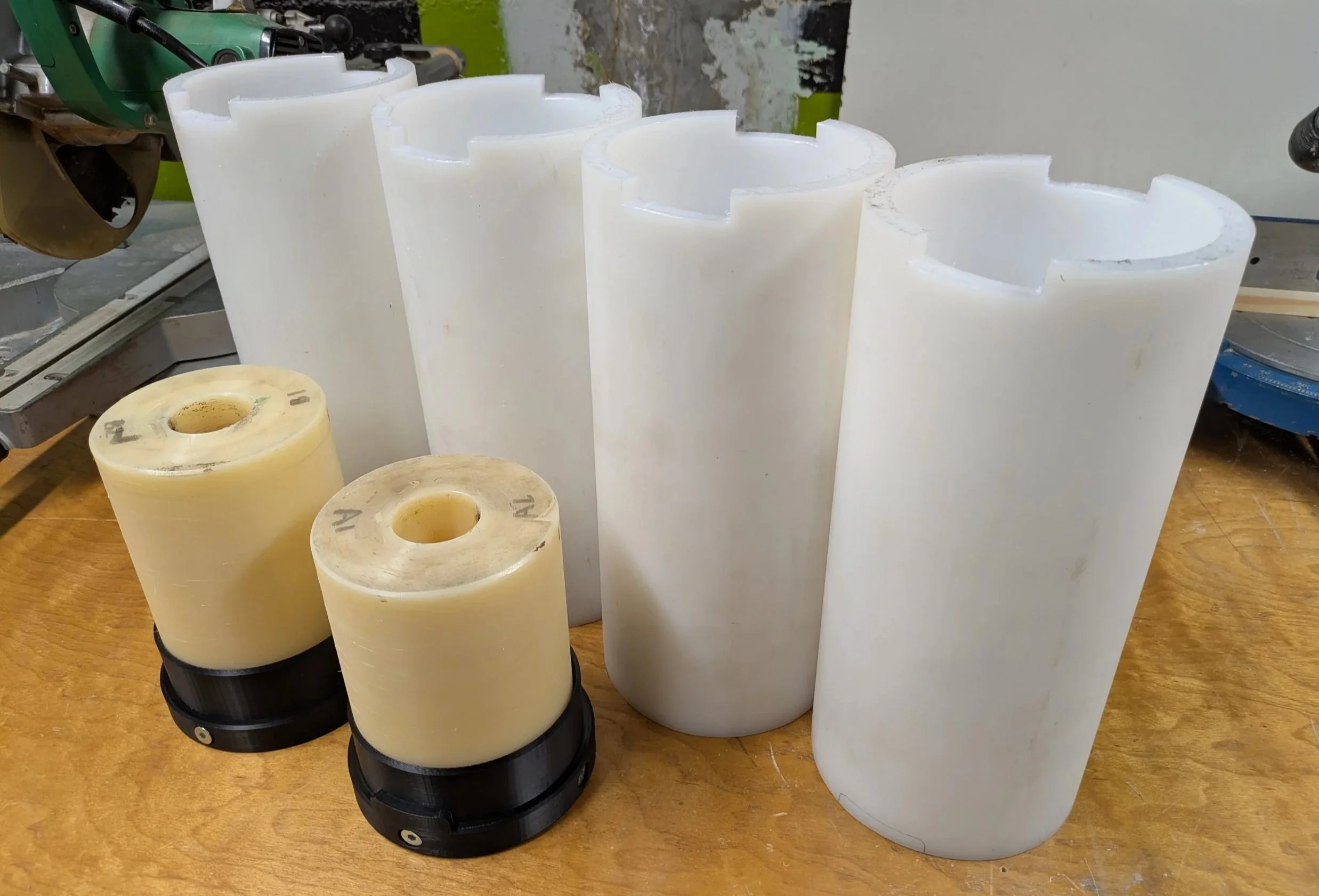
The new sleeve system, ready for installation
CPD installed and tested the new system onsite to ensure it performed up to quality standards. The client was pleased with the new system, stating “The sleeves are working great. I’m done with the old rollers…”
After the 3 phases, the cutting machine was performing better than it had in years. After weeks of testing the improvements, CPD checked in with the client and confirmed the end results:
Production is 10-15% faster
Output quality is higher: Client stated “This is the best the [feedstock] has cut”
Maintenancedowntime was reduced by 67%
Maintenance cost was reduced by 56%
Worn parts waste was reduced by 17% per year, reducing emissions by about 8.3kg CO2e per year
The machine is safer, cleaner, more ergonomic, and more cost effective
What were the keys to success?
Onsite consultation without disrupting production schedules
Deep understanding of how the machine is used and maintained
Examination of the larger production process as a whole
Engineering custom parts beyond those available from the manufacturer or generic suppliers